
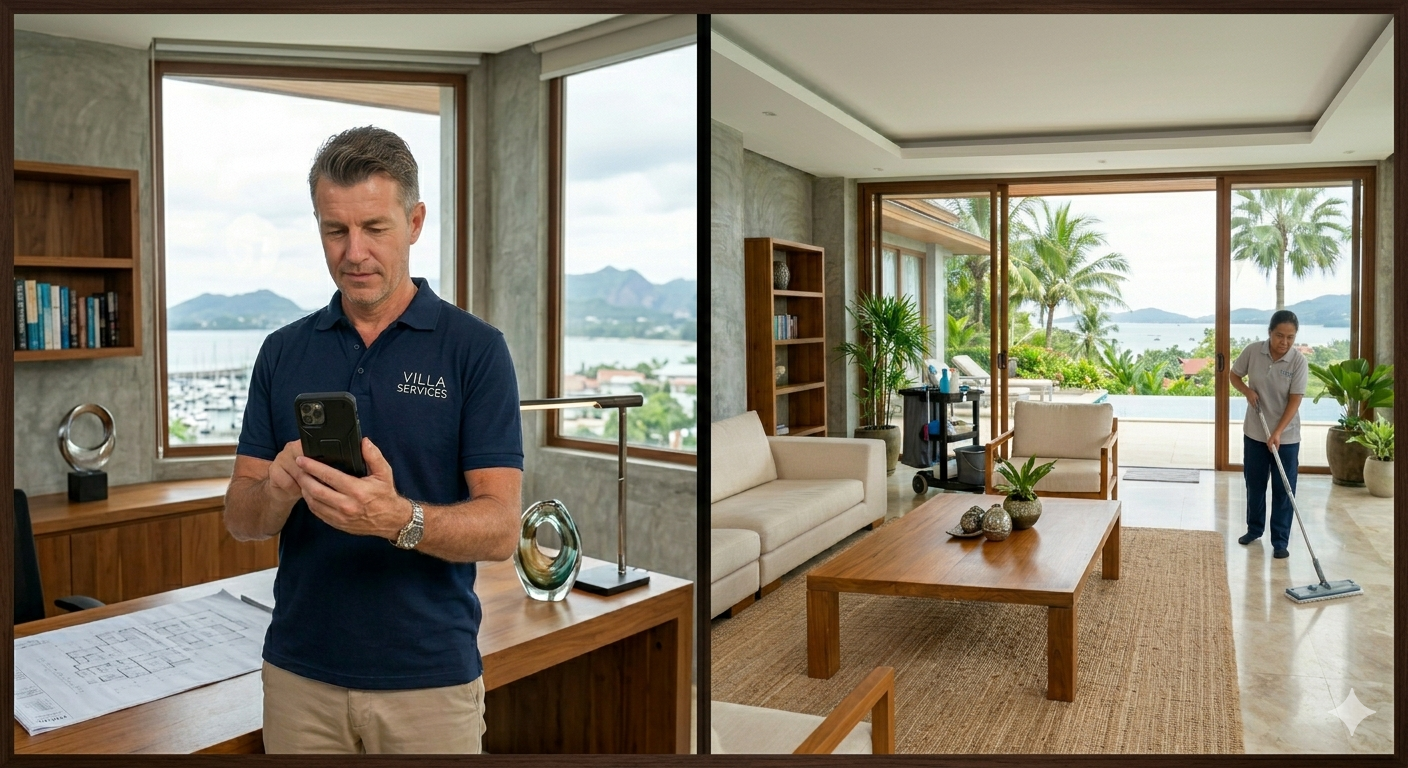
Managing villa maintenance teams in Phuket is different from managing a normal property team in a city apartment building. Villas are larger, more exposed to weather, and usually have pools, gardens, outdoor kitchens, AC systems, guest areas, owner expectations, and service teams moving between properties every day.
In Phuket, the operation also changes with the season. Heavy rain can affect pool clarity, drainage, gardens, pest control, outdoor tiles, and guest arrival preparation. During busy rental periods, the team has less time to recover from missed jobs. One late pool visit or one forgotten AC issue can quickly turn into a guest complaint or an owner message.
The key is not to chase workers harder. The key is to build a better villa maintenance workflow. Managers need clear schedules, structured tasks, photo proof, problem reporting, owner approvals, and monthly reports. Workers need simple instructions in the tools they already use. Owners need organized proof that the villa is being maintained properly.
This guide explains how villa managers and small maintenance companies can manage villa maintenance teams in Phuket with less confusion, fewer missed jobs, and better visibility.
Why Phuket Villa Maintenance Needs a Different Workflow
Phuket villas are exposed to a combination of tropical weather, outdoor living areas, guest turnover, pool usage, fast garden growth, and owner expectations. A villa may look perfect in the morning and still need urgent attention by the afternoon after heavy rain, falling leaves, blocked drainage, or a guest report.
A simple chat-based workflow often works at the beginning. The manager sends a LINE message, the worker replies, and the task gets done. However, that system becomes harder to control as soon as the company manages several villas.
The team may need to coordinate pool cleaning, garden maintenance, house cleaning, pest control, AC service, handyman repairs, owner approvals, contractor visits, arrival checks, and monthly reports. Each service has its own schedule, worker, checklist, and proof requirement.
When everything sits inside chat, the manager has to remember too much. Photos get lost. Owner approvals disappear between messages. Workers may assume someone else handled the job. The result is usually the same: the manager spends the day chasing instead of managing.
A better workflow keeps communication simple for workers but gives managers a real operations structure.
Build a Weekly Maintenance Schedule for Every Villa
The first step is to create a fixed weekly schedule for each villa. Do not rely on memory or casual reminders. Each villa should have a clear service plan that shows which team visits, what they do, and what proof they must send.
A basic Phuket villa schedule may include:
Pool cleaning several times per week.
Garden maintenance once or twice per week.
House cleaning before and after guest stays.
AC filter checks on a planned rotation.
Pest control monthly or as needed.
Drainage checks during rainy periods.
Guest arrival inspections before check-in.
Owner report preparation at the end of the month.
This schedule should not only show the service type. It should also show the responsible worker, expected time, checklist, and photo requirements. Once the schedule is clear, managers can turn repeated work into recurring service tasks.
VillaFlow’s recurring schedules inside VillaFlow’s features help managers create repeatable pool, garden, cleaning, AC, pest control, and repair routines for each villa. This prevents regular work from depending on memory.
Keep Workers in LINE, but Add Structure
Most field workers in Thailand already use LINE every day. DataReportal’s Digital 2025 Thailand report shows that Thailand has high internet and mobile usage, and LINE remains a major communication platform in the country. That matters because workers adopt systems faster when the workflow fits their existing behavior.
For villa teams, forcing workers into a new app can create friction. They may forget the login, ignore app notifications, or return to normal LINE messages because it feels easier. A better approach keeps workers inside LINE but sends structured tasks instead of loose instructions.
A structured LINE task should include the villa name, service type, checklist, required photos, problem reporting option, and Done confirmation. The worker should know exactly what to do without asking the manager for more details.
For example, a pool worker should receive the villa name, pool checklist, required water and deck photos, and a way to report issues like cloudy water or weak pump flow. A gardener should receive the garden zone, trimming tasks, waste removal notes, and before-and-after photo requirements.
To show readers how this works inside the product, link this section to how VillaFlow works. That page can explain the full workflow from setup to LINE tasks, photo proof, owner approvals, and reports.
Use Photo Proof for Every Important Task
Photo proof is one of the most important habits for villa maintenance teams in Phuket. Owners may not live nearby. Managers may not visit every villa every day. Guests may arrive soon after work is completed. Without photos, everyone depends on trust and memory.
Require photo proof for tasks that affect guest experience or owner confidence. Pool cleaning should include a clear photo of the water and deck. Garden maintenance should include trimmed areas, removed waste, and any problem zones. House cleaning should include key rooms or arrival-ready areas. Repairs should include before-and-after photos.
However, photo proof only works when it stays organized. If workers send photos into different LINE groups, private chats, or random albums, the manager still wastes time searching later.
VillaFlow attaches photos to the correct villa, job, date, and worker. This turns normal worker photos into real documentation. It also makes monthly owner reports easier because the proof is already connected to completed jobs.
For more context, link this part to your pool cleaning checklist for villa maintenance teams and garden maintenance checklist for tropical villas. These supporting articles help Google understand your villa maintenance content cluster.

Prepare for Phuket Rainy Season
Weather affects villa operations in Phuket. Rain can make pool water cloudy, push leaves into drains, create slippery tiles, increase garden growth, and expose roof or drainage problems. During wet periods, managers should adjust the maintenance schedule instead of reacting only after issues appear.
Teams can use the Thai Meteorological Department to check weather forecasts and plan extra inspections around heavy rain. A rainy-week checklist should include pool debris removal, drainage inspection, garden cleanup, outdoor tile safety checks, and photo proof after storms.
Rainy season also increases the importance of problem reporting. Workers should report blocked drains, standing water, leaking ceilings, slippery paths, broken outdoor lights, and garden damage quickly. A small report from the field can prevent a larger guest issue later.
Standing water also creates pest risk. The CDC mosquito prevention guidance recommends removing or treating standing water around buildings and outdoor areas. This makes drainage checks and garden inspections important parts of villa maintenance in tropical locations.
Separate Routine Jobs From Problems
One of the biggest mistakes in villa maintenance is mixing routine jobs and reported problems inside the same chat. A worker may complete garden maintenance but notice a broken outdoor light. Another worker may clean the pool but report weak circulation. A cleaner may finish the villa but find an AC leak in one bedroom.
The routine job may be done, but the problem still needs follow-up. If the worker only mentions it in chat, the issue can disappear quickly.
A good workflow separates these two actions. Workers should complete the scheduled job and report the issue separately with a photo. Then the manager can review the problem, decide the next step, create a repair task, and request owner approval if needed.
This structure protects the manager from losing important details. It also helps owners understand the difference between normal maintenance and extra repair work.
Create a Clear Owner Approval Process
Many Phuket villas are owned by people who are not on the island full-time. That makes owner approvals important. Managers need approval before certain repairs, purchases, or contractor jobs. Without a clear process, approved work can get delayed or forgotten.
Each approval request should include a short description, photos, estimated cost, urgency, and recommendation. Once the owner approves, the manager should turn that approval into a scheduled task immediately.
For example, if the owner approves a garden light repair, the system should create a follow-up job for the worker or contractor. If the owner rejects or delays the request, the manager should keep the status visible.
VillaFlow supports owner approvals as part of the same operations flow. Managers can send repair requests with photos and cost estimates, then track pending, approved, and rejected items from the dashboard.
Track Daily Work From One Dashboard
Managers need one place to see what is happening. Without a dashboard, they have to ask every worker for updates, search through LINE groups, and manually build the day’s picture.
A daily operations dashboard should show today’s jobs, overdue tasks, workers assigned, jobs completed, photo proof, open problems, pending approvals, and upcoming work. This gives the manager control without constant chasing.
The dashboard also helps with accountability. If a job is late, the manager can see it early and act before the owner or guest notices. If a worker completes the task but forgets photos, the manager can follow up quickly. If a villa has repeated problems, the manager can identify the pattern.
For readers who want to understand the full product, link this section to the VillaFlow homepage. It gives broader context on the platform and how the system connects workers, managers, and owners.
Review Performance Every Week
A strong villa maintenance team does not only complete tasks. It improves the workflow over time.
Every week, managers should review missed jobs, late jobs, repeated problems, photo quality, owner approvals, and worker performance. The goal is not to blame the team. The goal is to find weak points in the process.
Ask simple questions:
Which jobs were late?
Which villas had repeated issues?
Which workers need clearer checklists?
Which services need more frequent scheduling?
Which owner approvals delayed repairs?
Which photos were missing or unclear?
This weekly review helps managers improve service quality before problems become complaints.
Final Checklist for Managing Villa Maintenance Teams in Phuket
Create a recurring schedule for every villa.
Assign each task to one responsible worker or team.
Keep workers in LINE, but send structured tasks.
Use photo proof for important work.
Separate completed jobs from reported problems.
Check weather before adjusting rainy season schedules.
Create clear owner approval requests.
Track all daily work in one dashboard.
Review missed and late jobs every week.
Send monthly owner reports with completed work, photos, costs, and issues.
Conclusion
Managing villa maintenance teams in Phuket requires more than a chat group and a spreadsheet. The work changes with the weather, guest schedule, owner expectations, and the condition of each villa. Without structure, even good teams can miss jobs or lose important details.
A better workflow gives everyone the right tool. Workers stay in LINE and receive simple task instructions. Managers use a dashboard to track jobs, photos, issues, approvals, and reports. Owners receive clear updates instead of scattered messages.
VillaFlow helps villa managers and maintenance companies build that workflow. It keeps workers in the app they already use, gives managers full visibility, and turns daily maintenance into organized owner-ready proof. To continue the user journey, link the final VillaFlow mention to the VillaFlow homepage or use a CTA to view VillaFlow pricing.