
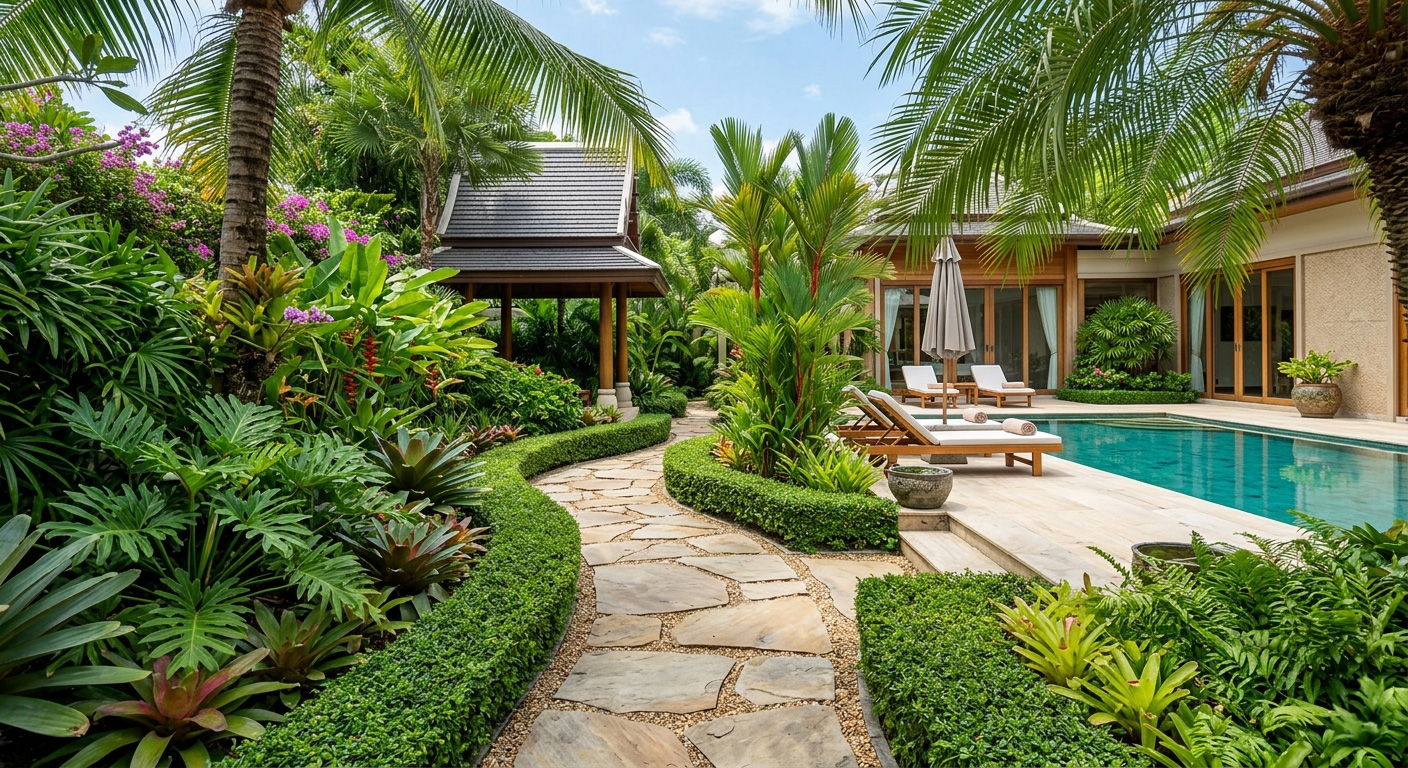
A tropical villa garden can look calm and effortless from the guest terrace, but behind that view there is constant work. Heat, rain, fast plant growth, insects, fallen leaves, irrigation issues, and outdoor guest areas all need regular attention. This garden maintenance checklist gives villa managers a practical way to keep tropical landscapes clean, safe, and photo-ready without relying on memory or scattered LINE messages.
For villas in Thailand, garden maintenance is not only about making the property look beautiful. It affects guest experience, owner confidence, worker accountability, and the long-term condition of the outdoor space. A missed trimming task can block a pathway. Poor drainage can create mosquito problems. Overgrown plants can hide damage, pests, or broken lighting. When the garden is managed as a recurring operation, the villa feels better maintained before anyone even walks inside.
Why Tropical Villa Gardens Need a Clear Maintenance System
Tropical gardens grow quickly. That is part of their beauty, but it also means small issues can become visible within days. A border that looked tidy last week may look messy after heavy rain. A palm with dry fronds may suddenly drop debris near a pool deck. A hedge can block a sign, camera, path, or sea view if it is not checked on schedule.
The real problem is usually informal chat-based work. A manager asks a worker to trim something, the worker sends photos somewhere in LINE, the owner asks for proof later, and nobody remembers which visit included which task.
A good tropical villa garden maintenance checklist should answer five questions: what needs to be checked, how often it should happen, who is responsible, what photo proof is required, and what should be reported as a problem. Once those answers are clear, garden care becomes repeatable. VillaFlow supports this kind of routine with recurring service schedules, LINE task management, photo documentation, and owner reports.
Daily Garden Maintenance Checklist
Daily garden checks should focus on visible areas, guest safety, and fast-moving issues. These are the jobs that protect the villa’s first impression.
Check entrance paths, parking areas, walkways, poolside zones, terraces, and garden seating areas. Remove fallen leaves, branches, flowers, coconuts, palm debris, and any slippery material from hard surfaces. After rain, check for puddles near steps, tiles, outdoor showers, and pool decks. These areas can become unsafe quickly.
Workers should also check bins, outdoor ashtrays, decorative pots, and water features. Any container that holds standing water should be emptied, cleaned, covered, or reported. For public-health context, the CDC mosquito prevention guidance recommends checking water-holding containers weekly and emptying, scrubbing, turning over, covering, or removing items such as buckets, flowerpot saucers, toys, pools, birdbaths, and trash containers.
Daily tasks should include a quick visual inspection of plants near guest areas. Look for broken branches, leaning pots, damaged edging, dry patches, pest activity, and signs that irrigation is too strong or too weak. Report issues with photos so the manager can decide what happens next.
Weekly Garden Maintenance Checklist
Weekly garden maintenance is where the villa starts to look professionally managed. This is the right rhythm for trimming, weeding, checking irrigation, and keeping the garden controlled.
Trim hedges, border plants, and fast-growing tropical foliage before they block pathways, lighting, windows, cameras, or views. Remove weeds from planting beds, gravel areas, around tree bases, along walls, and near outdoor equipment. Check mulch levels and soil exposure. Bare soil can make the garden look unfinished and may increase erosion during heavy rain.
Inspect irrigation lines, sprinkler heads, timers, and manual watering points. Look for blocked nozzles, broken pipes, wet areas that never dry, and plants that show stress. A weekly irrigation check can prevent both wasted water and dead plants.
Poolside garden zones need special attention. Plants near the pool should be trimmed so leaves do not constantly fall into the water. Check palms, bamboo, flowering plants, and groundcover near the pool edge. If the garden team and pool team are separate, use the checklist to make sure both teams know who is responsible for which area.
Monthly Garden Maintenance Checklist
Monthly checks should focus on garden health, cost control, and owner reporting. This is when managers look beyond the surface and review whether the landscape is improving, declining, or becoming expensive to maintain.
Review plant health across the whole property. Look for yellowing leaves, fungal signs, pest damage, weak growth, root exposure, unstable pots, and plants that may need replacement. Check larger trees and palms for dead branches or unsafe growth. Do not over-prune palms just to make them look clean; remove dead, damaged, or risky material, and keep healthy growth when possible.
Review fertilizer needs, mulch replacement, pest control visits, and seasonal planting. If outside contractors are used, record what they did, when they came, and what proof they provided. A monthly checklist should also include lighting checks, irrigation cost review, and drainage follow-up from previous issues.
For managed villas, this is the moment to prepare owner visibility. Owners do not want a long message thread. They want a clear summary: what was completed, what problems were found, what costs were added, and what needs approval.
Rainy Season Garden Maintenance
Rain changes the checklist. The garden may grow faster, but it also becomes more vulnerable to drainage problems, slippery paths, fungal issues, and pests. During wet months, managers should increase the frequency of drainage inspections and make sure workers check areas where water collects. For local weather planning, teams can also monitor the Thai Meteorological Department before adjusting weekly schedules.
After heavy rain, inspect slopes, retaining walls, low planting beds, drains, gutters, gravel paths, and outdoor tiles. Clear leaves from drainage channels before they cause overflow. Check that soil and mulch have not washed onto paths or into the pool.
Rainy season is also the time to watch for fungal growth and plant disease. Dense tropical planting needs air movement. If plants are packed too tightly, moisture stays trapped and disease can spread faster. Use trimming not only for appearance, but also for airflow and access.
Add these rainy season tasks: clear drains and garden channels, report standing water, check for fungal spots or rotting stems, trim dense growth around walls and paths, and confirm that outdoor lighting and cables are protected.
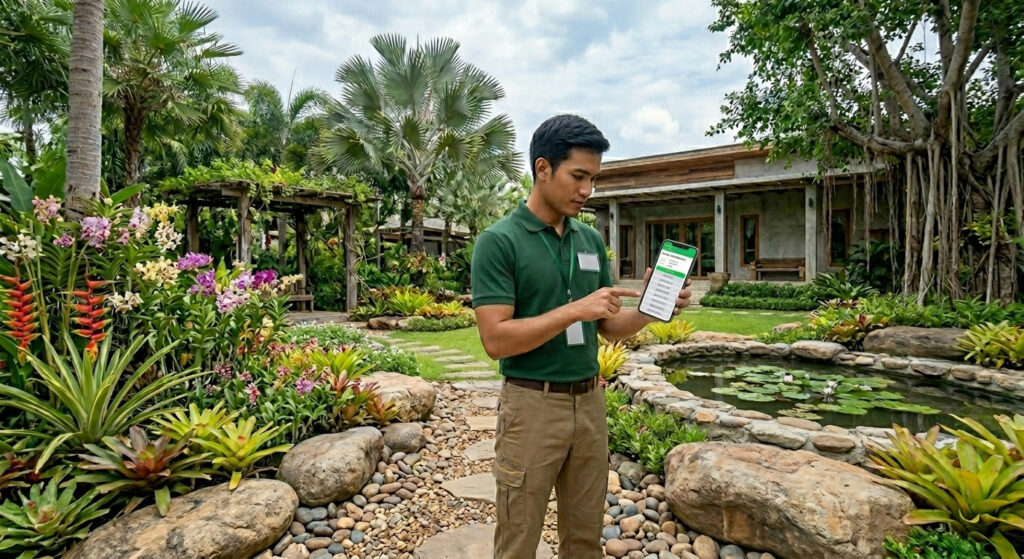
Dry Season Garden Maintenance
Dry season care is different. The main risks are heat stress, dry soil, tired lawns, and overwatering in the wrong places. Workers should check whether irrigation is reaching the right zones and whether plants need deeper watering rather than frequent shallow watering.
Mulch becomes especially useful in dry conditions because it helps retain soil moisture and protects beds from looking dusty or unfinished. However, mulch should not be piled directly against tree trunks or plant stems. Leave space around the base to reduce rot and pest problems.
Dry season is also a good time to review the garden layout. If some plants struggle every year, they may not be right for that location. Replacing high-maintenance plants with stronger tropical varieties can reduce labor, water use, and owner costs.
Pest, Mosquito, and Safety Checks
Garden maintenance is also part of villa safety. Workers should report wasp nests, ant trails, termite signs, snake hiding areas, and mosquito breeding risks. The checklist should include shaded corners, storage areas, drains, empty pots, buckets, trays, and decorative containers.
For pest management, the best approach is prevention first. The EPA integrated pest management guide describes IPM as a prevention-focused, common-sense approach that uses monitoring, prevention, and low-risk control methods before routine pesticide use. For villas, that means keeping vegetation away from walls where possible, removing clutter, avoiding standing water, and documenting repeat issues.
In VillaFlow, a worker can flag a problem directly from LINE, attach a photo, and send it to the manager’s issue queue. From there, the manager can create a follow-up repair or request owner approval if cost is involved. This is much cleaner than losing a pest issue inside a busy chat group.
How to Turn the Checklist Into a Repeatable Operation
A checklist only works if the team actually follows it. For villa managers, the easiest structure is to turn the checklist into recurring service schedules. Daily tasks cover cleaning and safety. Weekly tasks cover trimming, irrigation, and weeds. Monthly tasks cover plant health, costs, reports, and owner visibility.
Each scheduled job should include the villa name, the exact garden zone, the checklist items, required before and after photos, a Problem button for anything unusual, and a Done confirmation.
This is where garden maintenance software becomes valuable. Instead of asking workers for updates manually, the system sends the task to LINE, collects the photos, logs the status, and keeps everything attached to the correct villa. Managers get visibility, workers keep their normal workflow, and owners receive organized proof instead of random messages.
Final Garden Maintenance Checklist for Villa Managers
Daily:
Clean entrance, paths, poolside, terrace, and outdoor seating areas. Remove leaves, branches, flowers, and slippery debris. Check standing water and drainage risks. Report broken branches, damaged pots, pests, or safety issues. Send completion photos.
Weekly:
Trim hedges, borders, and fast-growing plants. Remove weeds from beds, paths, gravel, and walls. Check irrigation lines, timers, and wet or dry zones. Clean poolside planting areas. Document issues with photos.
Monthly:
Review plant health across the villa. Check palms, trees, lighting, mulch, and drainage. Record contractor work and garden costs. Upload invoices or material photos. Prepare owner report content.
Seasonal:
Increase drainage and pest checks during wet months. Increase irrigation and mulch checks during dry months. Review plants that fail repeatedly. Adjust schedules based on actual property conditions.
Conclusion
A beautiful tropical villa garden is maintained by small, repeatable actions that happen on time and are properly documented. The right garden maintenance checklist helps managers protect the property, support the workers, and give owners confidence that their villa is being cared for.
VillaFlow turns this checklist into a daily workflow. Workers receive garden tasks in LINE, upload photo proof, report problems, and mark jobs complete. Managers see the status in one dashboard, and owners get clear reports instead of chasing updates. For tropical villas, that is the difference between a garden that simply grows and a garden that stays under control.