

Air conditioning is one of the fastest ways a villa can disappoint a guest. A room can look spotless, but if the AC does not cool, leaks onto the floor, smells damp, or makes unusual noise, the guest experience changes immediately.
A clear villa AC maintenance checklist in Thailand helps teams prevent those problems. It gives workers a routine for basic checks, makes it easier to spot issues early, and creates a record of what happened at every property.
For villa managers, AC maintenance should not begin only when a guest complains. Thailand’s heat, humidity, dust, busy rental periods, and frequent guest turnover put extra pressure on cooling systems. A planned checklist helps the team act before a small issue turns into an urgent repair.
Why villas need a dedicated AC maintenance process
Villa AC units often work for long hours. Several bedrooms may run at the same time, while living areas, staff rooms, and owner areas have different schedules. When teams manage work through memory or casual messages, it is easy to forget which unit had a leak, which room needs a filter clean, or which repair the owner already approved.
The result is reactive work. A guest reports that a room feels warm. The manager calls a technician. The worker searches chat history for previous notes. Meanwhile, the guest waits and the team loses time.
Instead, use a villa AC maintenance checklist in Thailand to keep basic inspections, cleaning, problem reports, and contractor visits connected to the correct villa and room.
Check AC performance before guests arrive
Arrival inspections should include a quick AC test in every guest room. Turn the unit on, confirm that cool air starts normally, and look for visible leaks or error messages. Check that the remote is present, has working batteries, and matches the unit.
Also listen for unusual noise. A rattle, strong vibration, or constant dripping may need a technician even if the room still feels cool. Report the problem before guests arrive so the manager has time to respond.
Add this step to the team’s guest-arrival inspection checklist after that post is published. It keeps final room readiness and preventive maintenance connected without treating them as the same task.
Daily and turnover checks
Workers do not need to service an AC unit every day. However, they should notice obvious issues during cleaning, inspection, or guest turnover.
- Confirm the unit turns on and cools normally.
- Look for water below the indoor unit or around the drain line.
- Check for a bad smell when the unit starts.
- Make sure the remote is available and works.
- Check that no furniture, curtains, or luggage blocks airflow.
- Report a dirty-looking filter cover, unusual sound, or repeated guest complaint.
These observations help the manager decide whether to create a maintenance job. They also help prevent small warning signs from disappearing in a general cleaning chat.
Monthly villa AC maintenance checklist
Each month, review every unit that the property team can safely inspect. Do not ask untrained staff to perform electrical or refrigerant work. Instead, focus on visible condition, operating performance, and clear reporting.
Check indoor-unit airflow, filter condition, remote operation, drainage signs, and noise. Confirm that the room reaches a comfortable temperature during a normal test. Review open problem reports and previous technician notes. If a unit has repeated issues, create a planned contractor visit rather than waiting for a breakdown.
Managers can also compare the work with the villa’s monthly maintenance report. This helps owners see which units the team checked, which repairs they approved, and what work is planned next.
Plan professional servicing
Basic checks help workers find issues early. Qualified technicians should handle electrical faults, refrigerant work, major leaks, deep cleaning, and repairs that need specialist tools.
Before a contractor visits, create a clear job. Include the villa, room, unit type if known, symptom, photo, guest schedule, and the last service date. Ask the technician to report what they found, what they repaired, and whether the unit needs another visit.
This process prevents vague notes such as “AC fixed.” A useful record explains the location, cause, work completed, cost, and next action. It also makes owner approval much easier when a repair has a cost.
Watch for humidity and drainage problems
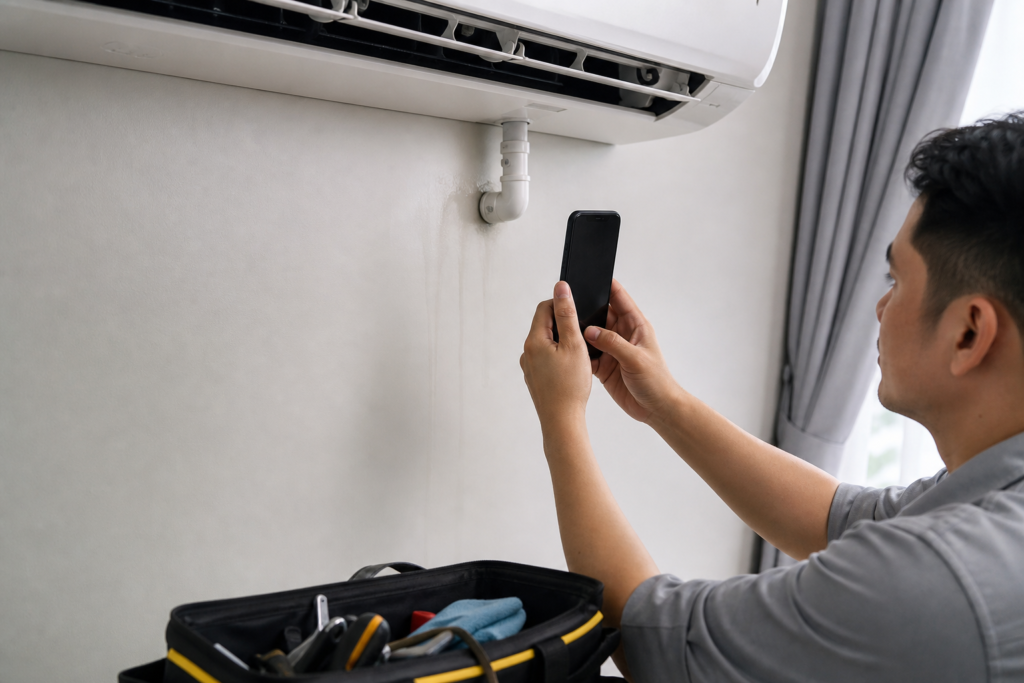
Humidity can make AC problems harder to ignore. A blocked drain line may lead to water leaks, marks on walls, damp smells, or damage near furniture. Therefore, workers should report moisture early, even when the unit still cools.
Good airflow and properly maintained ventilation systems also support more comfortable indoor spaces. The CDC’s ventilation guidance notes the importance of maintaining air movement in indoor areas. For villas, the practical point is simple: do not ignore blocked vents, weak airflow, or persistent damp smells.
Record photo proof and repair history
Photo proof is valuable for AC work because many issues change quickly. A worker can photograph a water leak, a visible error code, a damaged remote, or the completed repair. The manager can then attach that proof to the correct room and job.
Over time, the history helps managers see patterns. If the same bedroom AC unit repeatedly leaks, the company can investigate the cause rather than paying for short-term fixes. If several units need work before high season, the manager can plan a preventive service round.
VillaFlow keeps this information in one place. Workers can report an AC issue through LINE, managers can create a follow-up task, and owners can receive a clear approval request when a repair needs spending.
Build AC checks into the wider villa maintenance workflow
AC maintenance works best when it is part of the full operation. The task schedule should connect with cleaning, guest arrivals, inspections, reported issues, owner approvals, and monthly reporting.
For example, the cleaner notices a leak during turnover. They report it with a photo. The manager creates an urgent repair task. A technician visits before the next guest arrives. Finally, the manager records the completed work and includes the cost in the owner report.
That is a much stronger process than a message in a group chat. It gives each person a clear responsibility and keeps the repair visible until the team closes it.
Final villa AC maintenance checklist in Thailand
- Test each guest-room AC unit before arrival.
- Check cooling, airflow, noise, remote controls, and visible leaks.
- Report damp smells, recurring leaks, or error messages immediately.
- Create separate jobs for issues; do not hide them inside cleaning tasks.
- Use qualified technicians for specialist repairs and servicing.
- Save photos, contractor notes, costs, and owner approvals with the job.
- Review recurring problems during the monthly maintenance report.
Conclusion
A villa AC maintenance checklist in Thailand protects guest comfort and helps teams avoid expensive last-minute repairs. It gives workers a simple way to identify problems, while managers get the records and visibility they need to act quickly.
VillaFlow helps teams turn AC checks into scheduled tasks. Workers receive instructions in LINE, upload photo proof, and report problems without learning a new app. Managers track jobs, approvals, and costs from one dashboard. Explore the VillaFlow features to see the full workflow.